This month, three luxury bunker developers invited me to tour their properties, on the theory that a columnist who has predicted fourteen apocalypses might bring buyers. I accepted all three invitations, because I believe in seeing how the other half plans to survive us.
The flagship property sits 40 feet under a former missile silo and includes a hydroponic orchard, a wine cave, a spa level, and a panic room, which raises questions, the entire structure being a panic room. There is a second panic room inside the first, the sales agent explained, for when the feeling recurs.
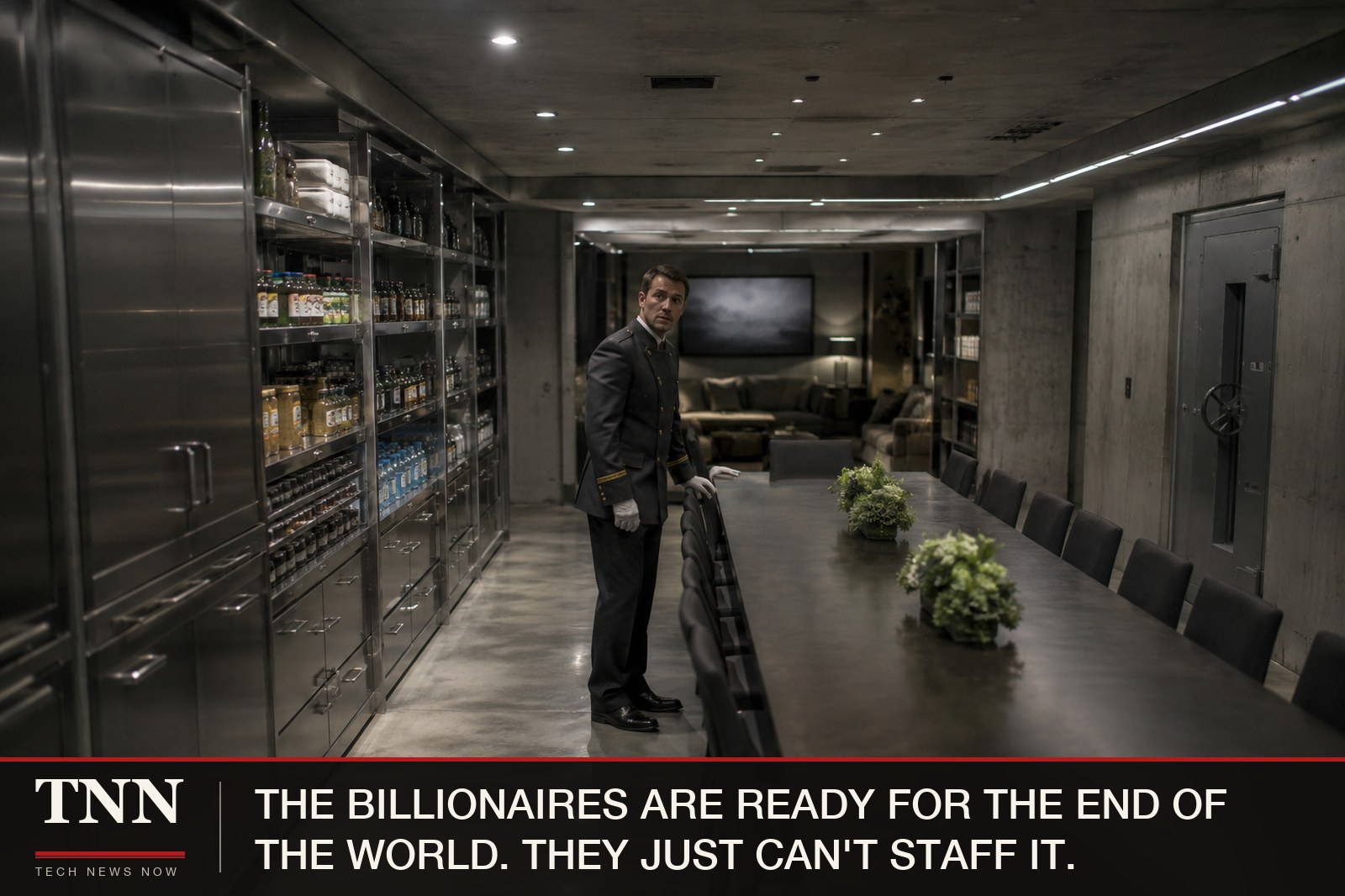
What the brochures do not mention is staff. A property of this class requires engineers, medics, two chefs, a sommelier, and someone to maintain the air filtration system, which is the only amenity that is not optional. The developers’ current solution is to call this workforce “community members” and to offer them, in lieu of wages, continued existence. One brochure describes the arrangement as “equity.” It does not specify in what.
A developer told me, in confidence, that his clients’ most common question is how to guarantee the guards’ loyalty after money stops meaning anything. The leading answers, he said, are rations controlled by the principal, and “a culture of gratitude.” I asked what the guards’ most common question was. He said the guards don’t ask questions. He offered this as a selling point. I recorded it as a countdown.
Here is the load-bearing flaw, free of charge, which is not a price point these gentlemen recognize: the end of the world is a staffing event. Every amenity in the brochure is somebody’s shift. The man who owns the bunker has never once serviced an air filter, and the woman who services the air filter will eventually notice that the org chart is upside down and that she is holding the only wrench. Capital can buy the door, the vault, and the trout stream, but it cannot buy the reason anyone shows up on Monday, and 40 feet underground, every day is Monday.
I declined to purchase a unit. Not for political reasons, though I keep those in bulk, but for practical ones: I asked each developer what happens if the staff simply leaves, and all three gave me the look my landlord gives the radiator. If you must spend the apocalypse somewhere, spend it where humanity has always ridden out its weather: among people who know how to fix things and have decided, for now, that you’re worth keeping around. Bring something to the table. A skill, ideally. They have seen your yacht, and they were not impressed; they were at work.